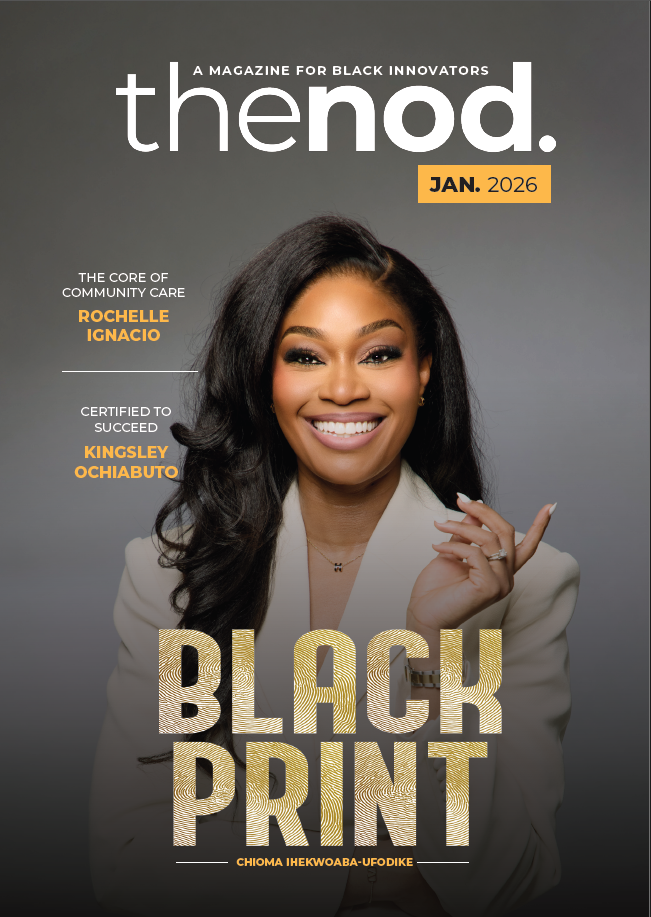





Paper, Power & Protection
Legal documentation sits quietly behind power. Protection follows those who know how to give legal structure to what they create. As a commercial lawyer frequently advising on IP, it is clear that Black creativity often moves faster than the systems intended to protect it, and that gap carries real cost.
Intellectual Property is how the law recognises ownership of non-physical assets. Trademark sits within that framework, protecting brand identifiers that customers associate with a product or service. Legal infrastructure refers to the laws, registrations, contracts, and enforcement mechanisms that secure these rights.
Building generational wealth requires assets that outlive the creator. For startups, IP is usually the first real asset on the balance sheet. Without protection, brands get copied, ownership quietly shifts, and the business fails the first real test of scale. History shows this pattern repeatedly. Protected IP helps businesses scale, withstand scrutiny, and retain control as they grow. Unprotected IP does not survive transitions. When the creator exits, the value often follows someone else, taking generational wealth with it.
Legal Infrastructure as Economic Defense
Where systemic inequality is already built into the market, legal infrastructure matters because it evens the playing field, particularly for Black enterprise. It limits asymmetrical power dynamics in transactions where money, access to lawyers, and sophistication usually sit on one side.
Strong legal infrastructure is what turns IP into an asset that can be valued, licensed, or sold. It allows trademarks to function as signals of legitimacy and trust, and gives innovation the stability needed to scale. This allows creators and businesses not only to own and profit from what they create but to pass it down through generations. For Black wealth, legal infrastructure is not just legal; it is economic defence.
In law, ideas on their own are not owned. A business concept discussed in meetings, shared verbally, or casually posted online may feel proprietary, but without documentation, contracts, or registration, enforcement becomes difficult. Ownership attaches only when an idea is expressed in a protected form, such as written materials, a design, a brand name in use, or registered IP. If someone else formalizes the idea first, they are far more likely to hold legal standing. IP law rewards those who act and document first.
Another common misconception is that IP protection is only relevant for large corporations. In reality, it matters most for small and emerging businesses. Large companies can absorb disputes that are expensive and time-consuming; startups often cannot. Early trademarks, copyrights, and clear ownership structures protect growth before it attracts attention. Delaying protection may feel like saving money, but it usually shifts the cost to a later stage, when the business finally has something to lose. For Black enterprise, this risk is amplified. Black-founded businesses are often culture-driven and trend-setting, which means attention arrives quickly. Without early IP protection, that attention can translate into imitation rather than opportunity.
Barriers Built Into the System
IP protection fails most often at the beginning. Overlapping financial, structural, and institutional barriers make protection harder to obtain and sustain. Cost is the most immediate obstacle. IP protection requires upfront spending at the very stage when startups are most cash-constrained. For most founders with limited capital, these costs compete with basic survival expenses like inventory, rent, and marketing. IP protection is often delayed, not because it is undervalued, but because it feels unaffordable. Enforcement adds another hurdle: monitoring infringement or taking action requires resources that many simply do not have.
Gaps in IP literacy compound the problem. Many founders are unclear about what IP they own, when rights arise, or how quickly ownership can slip away. Historical underrepresentation in patenting and entrepreneurship ecosystems also means fewer tailored supports and outreach. The result is predictable: systems built without Black access in mind create friction at every step.
Making IP Accessible
Progress requires layered solutions: legal practice, institutions, funding, and policy. No single fix is enough, but together they can shift outcomes in meaningful ways.
Shared legal resources, cooperative licensing, and collective brand protection strategies can lower individual costs. Subsidies, vouchers, and grant-linked legal credits further reduce barriers without lowering standards.
General business advice is not enough. Clinics, incubators, and accelerators serving Black founders are most effective when IP lawyers are involved from the outset. Remote consultations and regional partnerships can extend access beyond major legal hubs. Representation within the IP profession also matters. When entrepreneurs see advisors who understand their context, engagement improves.
Policy can reduce friction by simplifying filing processes, improving guidance, and limiting unnecessary complexity. The gap between creation and ownership is not inevitable. It reflects choices about access, cost, education, and enforcement. When IP systems are navigable and affordable for Black enterprises, ideas are far more likely to become assets, and enterprises are far more likely to last.
Power Shifts in Competitive Markets
In competitive markets, speed and capital are rewarded, while visibility often attracts imitation faster than opportunity. For Black-owned businesses, securing IP shifts the power dynamic by converting visibility into enforceable ownership. It replaces informal leverage with legal authority, strengthens negotiating positions, builds credibility with institutions, limits extraction at scale, and enables long-term strategy instead of reactive survival. IP protection also helps preserve cultural authenticity by keeping founders in control of their brand narratives.
Securing IP moves Black-owned businesses from vulnerability to leverage, ensuring that in competitive markets they are not only able to create value, but positioned to keep it, defend it, and build on it. Entrepreneur Shanae Jones of Ivy’s Teas has spoken openly about how trademark protection changed her business after another party began using her branding. Filing provided the legal authority to stop misuse and the confidence to invest and expand. That experience ultimately led to her launching The Black Woman Trademark Fund, which supports other founders in protecting their brands early, before visibility becomes expensive.
Turning Creativity Into Legacy
Generational wealth depends on whether ownership can survive transition. IP protection determines whether value remains attached to a business when its founder steps back, sells, or passes it on. Properly structured IP allows businesses to be transferred, licensed, or inherited without losing coherence or control. It also supports collective wealth by anchoring jobs, local economies, and licensing ecosystems within the community. Effort alone does not build legacy. Assets that endure do.
Trademarks and other IP rights stabilize businesses over time by preserving brand integrity, reputation, and market position. This stability is what allows successors to build forward rather than start over, or worse, litigate backwards.
Early safeguards shape these outcomes. Founders benefit from identifying which assets carry long-term risk if lost, limiting exposure before protection is in place, and securing brand rights before visibility accelerates. Basic documentation, entity formation, and simple written agreements clarify ownership and prevent disputes early, when clarity is cheapest.
Most IP losses are not sudden. They result from delay. By the time the value is obvious, leverage has usually shifted. Early protection helps Black entrepreneurs convert creativity into control and control into lasting wealth.