




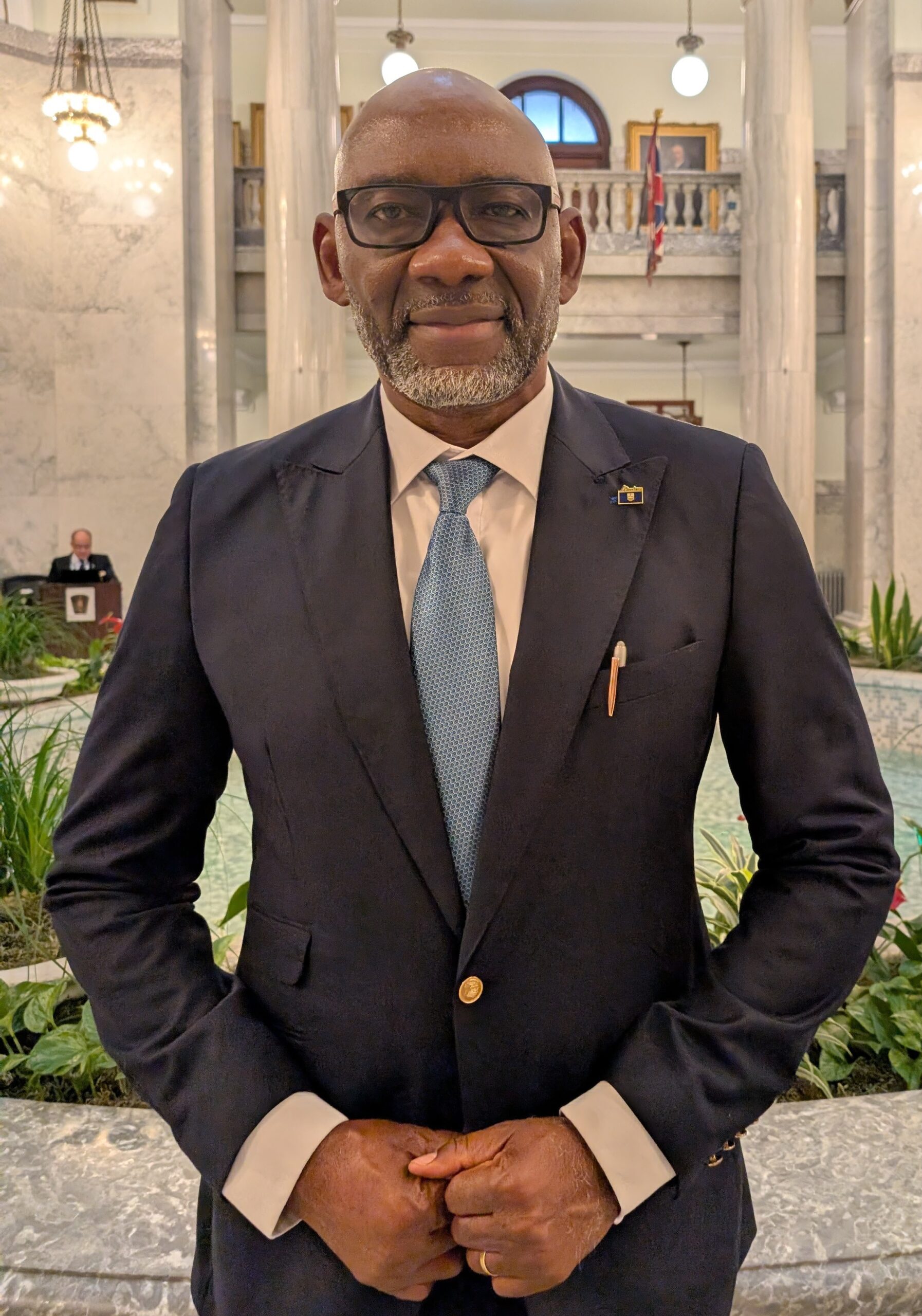

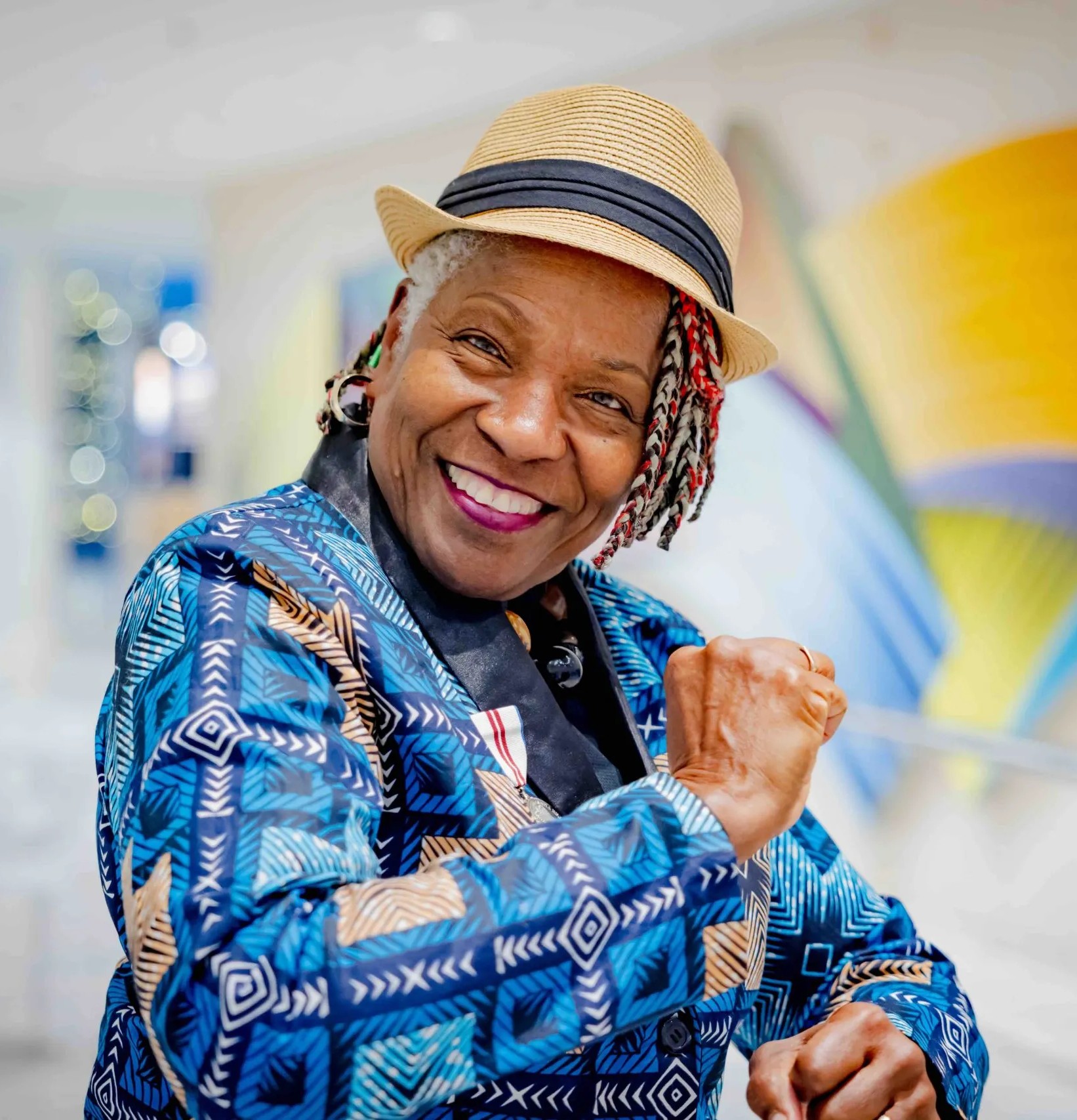
The role of Historian Laureate sits at a meaningful point in my journey, rooted in heritage, community, and the discipline of remembering. Being the first in this role carries responsibility beyond recognition. It extends locally and nationally, across the many intersections that shape our communities.
I have attended national conferences carrying one message: Edmonton holds a Black community that is thriving, resilient, and achieving on national and international stages. That story is often incomplete. Part of my work is to widen it and to encourage younger generations to see themselves in roles of service, leadership, and cultural stewardship.
Early Formation and Shifting Identity
That responsibility did not begin here. It has followed me across continents and through lived experience.
I grew up in a British colonial environment, raised by two self-employed grandmothers. One was a Butlerite in an anti-colonial movement. Her politics shaped my parents and me. It created an early understanding of advocacy for people whose voices are silenced and often ignored.
When I left Trinidad and Tobago, I identified as a “Trini.” In Toronto, I became “Black.” With that came housing discrimination, grading bias, and restricted access to spaces. These patterns continued in Edmonton. They were not isolated experiences.
These transitions shaped my work. I focus on racism in context, generational trauma, erasure, and also survival. I pay attention to what history leaves out as much as what it records.
Challenging Dominant Historical Narratives
My responsibility as Historian Laureate is to stay with the facts while asking difficult questions about omission.
Why were early Black families who fled Jim Crow in the United States placed in remote Amber Valley after detention at the border?
Why was Lulu Anderson removed from a theatre on Jasper Avenue in 1922?
Why is there no accessible record of her case, and why were related records destroyed later?
These are not abstract questions. They show how memory is shaped and how erasure enters the public record. To engage them is to challenge incomplete versions of Edmonton and Canadian history.
This work also requires clarity. Indigenous Peoples are the First Peoples of this land. That is foundational and cannot be contested. Alongside this, Black communities who arrived through multiple migration routes, including families from Oklahoma and Texas with ties to Indigenous Southern tribes, are part of early settlement history. These histories sit together in understanding belonging and contribution.
Archives Are Living History
History, to me, is not fixed. It is lived. Archives are primary records, not yet fully interpreted or published. I try to make them accessible to everyday people, focusing on people rather than buildings or monuments. That includes difficult histories: the presence of the Ku Klux Klan in Edmonton buildings, and the exclusion of Black citizens from spaces marked “Whites Only,” such as the Gibson Block. These are part of the city’s record, and they belong in its telling.
During my academic journey, I was in an organisation alongside Rosa Parks, at a time when her recognition was still developing. That reinforced the importance of documenting lived struggle before institutions fully name it.
Later, I returned to Trinidad and Tobago and interviewed struggle leaders from the 1937 labour revolt, as well as CLR James. In Edmonton, I continued this work with over sixty interviews, including Black nurses, Amber Valley descendants, Caribbean oil workers, activists, and community advocates. These are publicly available as part of ongoing education work.
Identity as Method and Lens
My identity is central to this practice. It is not separate from it. It travels with me and shapes how I interpret what I see. From Anambra State in Nigeria to stiltwalking traditions from the Banna people during Edmonton’s Cariwest parade, I see continuity in cultural expression across place and time.
These connections reinforce a postcolonial understanding of shared heritage. Across decades of work, mutual respect has remained the foundation. Without it, archives stay static. With it, they become living tools.
Preserving Labour Histories and Economic Memory
One of my central focuses has been on Caribbean oilfield workers in Alberta’s development. Before Edmonton, I spent nearly twenty years in Trinidad and Tobago documenting labour history and building a Labour Library. In Edmonton, I documented Caribbean workers recruited from the 1960s to support Syncrude’s development, spanning professionals, engineers, pipe fitters, and labourers. Their stories form part of Canada’s economic history.
I also focus on early Black communities such as Amber Valley and sleeping car porters, and on Black nurses whose contributions were often missing from institutional records. Some identities were obscured by anglicised names. Their stories are now part of public interviews and podcasts.
This work continues because history is not finished. It is carried forward by those willing to record it, question it, and keep it alive.